
The Meeting Point of Nondirective Breathwork and Mindfulness
At first glance, nondirective breathwork and mindfulness might appear to belong to different traditions. Breathwork can seem active, embodied, and sometimes intense, while mindfulness is often imagined as still, quiet, and contemplative. Yet at their core, both practices share a deep kinship: each invites us into direct contact with life as it unfolds, moment by moment.
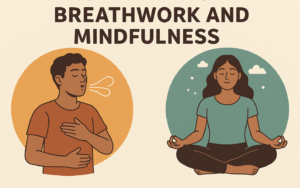 Two Paths, One Destination
Mindfulness asks us to observe our experience with gentle attention—noticing thoughts, sensations, and emotions without trying to change them. We sit with what is, cultivating a stance of curious awareness rather than judgment or control.
Nondirective breathwork takes a different route to a similar place. Rather than sitting in stillness, we engage the breath—not to force it into a particular pattern, but to follow where it wants to go. We breathe more fully, more consciously, and in doing so, we create space for whatever arises. The body begins to speak. Emotions surface. Insights emerge. And through it all, we practice the same fundamental art that mindfulness teaches: we allow.
The Art of Allowing
This is where the two practices truly converge. Both ask us to develop a capacity that runs counter to our usual way of being: the ability to let experience move through us without interference.
In mindfulness meditation, we notice the itch but don’t scratch it. We observe the anxious thought but don’t follow its narrative. We feel the sadness but don’t push it away.
In nondirective breathwork, we follow the breath deeper and notice what emerges—perhaps a trembling in the hands, a tightness in the chest, or a sudden wave of grief. And rather than analyzing or suppressing these responses, we stay present. We breathe. We allow the body’s innate wisdom to do its work.
Both practices rest on a profound trust: that when we stop trying to manage our inner experience, something intelligent begins to happen on its own.
Presence Through Different Doorways
If mindfulness enters through the door of stillness, breathwork enters through movement. But both lead to the same room: the present moment.
For some people, sitting still can feel impossible. The mind races. The body fidgets. The instruction to “just observe” can feel abstract or frustrating. For these individuals, breathwork offers a more tangible anchor. The breath is something to do, a rhythm to follow, a sensation vivid enough to hold attention even when the mind wants to wander.
Conversely, those who practice breathwork often discover that the real transformation happens not in the breathing itself, but in the quality of awareness they bring to it. The breath opens the door, but it’s the mindful presence—the willingness to stay with whatever arises—that allows healing and insight to unfold.
Beyond Technique: A Way of Being
What makes both practices “nondirective” in the deepest sense is that neither tries to produce a particular outcome. We don’t breathe to achieve a specific state. We don’t meditate to become calm or enlightened. We simply show up, pay attention, and trust the process.
This non-striving quality is perhaps the most radical aspect of both practices. In a culture obsessed with optimization and control, breathwork and mindfulness offer something countercultural: the suggestion that some of the most profound changes occur not through effort, but through release.
Integration in Daily Life
The true meeting point of these practices isn’t on the meditation cushion or the breathwork mat—it’s in how they reshape our relationship with everyday life.
Both teach us to recognize when we’re resisting reality. Both help us notice the patterns of tension, avoidance, and control that we unconsciously repeat. And both offer an alternative: the possibility of meeting each moment with openness, curiosity, and a willingness to be changed by what we find.
Whether we arrive through the stillness of mindfulness or the activation of breathwork, we’re learning the same essential skill: how to be fully alive to our experience, whatever it may be.
The Complementary Dance: A Practice of Presence
When practiced together, nondirective breathwork and mindfulness enrich one another. Breathwork invites powerful states and deep release, opening the door to hidden layers of the psyche. Mindfulness provides the steady, compassionate attention needed to remain present with whatever surfaces and to integrate those experiences into daily life.
Rather than two separate paths, these practices form a dynamic interplay: breathwork expands the field of experience, mindfulness refines our capacity to hold that expansion with awareness and care. Together, they reveal that healing and awakening are not about fixing ourselves, but about trusting the intelligence of life as it moves through us—breath by breath, moment by moment.
Ultimately, transformation doesn’t always require force or effort. Sometimes it simply requires us to stop, to breathe, to pay attention. And in that attention, something shifts. Not because we’ve made it happen, but because we’ve finally allowed it to.