
 Drawing Mandalas After Breathwork Sessions
When a breathwork session ends, the process of integration is just beginning. What unfolds in the hours and days afterward is often as important as the breathing itself. One of the most effective and creative ways to support integration is through drawing mandalas.
Why Mandalas?
Mandalas—drawings made within a circle—have long been used across cultures to symbolize wholeness, balance, and the flow of life. In the context of breathwork, the mandala becomes a safe container for what arises during the session.
The shapes, colors, and patterns that emerge often mirror aspects of the inner experience: emotions that surfaced, images that appeared, or energies that moved through the body. The mandala offers a way for the psyche to express and anchor these experiences beyond words.
How to Begin
-
Prepare Your Space
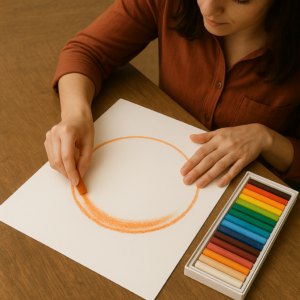
Sit somewhere quiet with paper, a pre-drawn circle, and some colored pencils, pastels, or markers. You don’t need to be an artist—this is about expression, not perfection. -
Recall the Session
Take a few moments to feel back into your breathwork journey. Notice any images, sensations, or emotions that linger, and allow them to guide your hand. -
Focus on the Circle
Begin within the circle. Let colors and shapes arise spontaneously. Trust the process—symmetry, repetition, or even chaos are all welcome. But also note, if it feels right to draw outside the circle, that’s okay too. -
Stay in the Process
Try not to analyze while you draw. Allow the mandala to flow as a continuation of the session itself. -
Witness Your Creation
When finished, sit quietly with your drawing. Let yourself notice what feelings it evokes, without needing to interpret or explain it right away.
The Purpose is NOT to Draw Something Pretty
Remember: this is not about making “art” to display or impress others. The mandala’s value lies in:
-
Giving form to what words can’t capture.
-
Containing and grounding the energies stirred up in the session.
-
Bridging unconscious material with conscious awareness.
-
Anchoring your experience so it can integrate more fully over time.
If your mandala looks messy, childlike, or chaotic—that may be exactly what is needed.
If You Have a Story in Your Mind That You Are a “Terrible Drawer”
If the inner critic tells you that you’re not artistic enough, try drawing your mandala with your non-dominant hand. This can:
-
Release perfectionism.
-
Quiet the analytical mind.
-
Invite play and spontaneity.
-
Reconnect you with a more intuitive, childlike state.
This simple shift can free you from judgment and allow raw, authentic expression to emerge.
Drawing With a Blindfold On
Some people have even taken the process further by drawing with a blindfold on. This practice:
-
Removes all concern about appearances.
-
Deepens surrender to the process.
-
Heightens intuition and sensation.
-
Reveals imagery that is often surprising and deeply authentic.
The result may look wild or unrefined, but it carries a direct imprint of your inner experience.
When You’re Done Be Sure to Add the Date
Always add the date to your mandala. Over time, your collection becomes a living record of your inner journey. You may notice themes that span months, shifts in color palettes, or symbols that evolve as your process deepens.
Together, they form a visual diary of your soulwork.
Some People Like to Use the Back of the Mandala to Make Notes
The details of a session can fade quickly. Consider using the back of your mandala to jot down:
-
Bullet points about emotions, images, or moments you want to remember.
-
Phrases or insights that stood out.
-
Body sensations or breakthroughs.
This pairing of image and notes creates a fuller record of your process, especially if you have a strong analytical side.
Pinning a Mandala Where You Can See It
If a session feels especially powerful, consider pinning your mandala somewhere visible—above your desk, on an altar, or near your bed.
Seeing it regularly allows the imagery to:
-
Penetrate more deeply into your awareness.
-
Act as a silent companion for integration.
-
Remind you of the truth or energy that came through the session.
Looking Up Symbols and Images From Your Session
Sometimes mandalas contain powerful symbols or archetypal images—animals, landscapes, shapes, or mythic figures. Afterward, you may wish to look them up to explore their resonance.
-
Research the symbol in mythology, psychology, or spiritual traditions.
-
Notice what personally resonates for you.
-
Let the symbol deepen your process rather than define it.
A helpful resource is Stanislav Grof’s The Way of the Psychonaut, Volume 1, which explores symbolic imagery in non-ordinary states of consciousness and how it connects with archetypal and transpersonal realms.
Websites for Exploring Symbols
-
Symbolikon
-
Symbols.com
-
Dream Moods Symbols Dictionary
-
Mindvalley Spiritual Symbols Guide
A Story From My Training
During my own facilitator training, one of the most powerful experiences came when participants were asked to bring their entire collection of mandalas from the two-year training (and even going back to the beginning of their breathwork experiences, which for some people went back years).
Over that two weeks, each person had a chance to present. We sat in a circle and they placed their mandalas in chronological order in the middle, walking us through their journey. It was incredible to see the visual unfolding of a soul’s process:
-
The same color theme repeating for months or longer before a new hue emerged.
-
Symbols that foreshadowed deeper work in future sessions.
-
Images that made no sense at first but later revealed their meaning over time.
This exercise blew me away and was my favorite experience of the entire training… it was so powerful to see the instinctual unfolding of everyone’s Inner Guidance, and see how it was all guided by a deeper intelligence — that weaves healing and transformation across months and years through imagery and symbol and color.
Suggested Art Supplies
You don’t need special materials to draw mandalas—any paper and any pen, pencil, or marker will do. Still, if you feel inspired, here are some supplies I use and recommend:
-
Pastels – Pentel Arts Oil Pastels, 50-Color Set
Vibrant, blendable, and inexpensive.
View on Amazon - Drawing Pad – Strathmore 300 Series, 14″x17″ (or 12″x18″)
Large pages that give plenty of room for your mandala.
View on Amazon
Many people enjoy keeping a dedicated mandala pad so they can track their journey over time.