
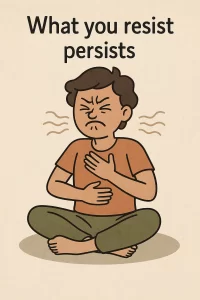
 What We Resist Persists: How Breathwork is a Lesson in Surrender
There’s an old saying: “What we resist, persists.” Nowhere is this more apparent than in the breathwork journey.
When participants enter into expanded states of awareness, the psyche often brings forward long-buried memories, unresolved emotions, or unfamiliar sensations. It’s natural to want to push them away—clenching against the tears, distracting ourselves from the shaking, or trying to hold on to a fleeting sense of control. But resistance doesn’t dissolve the experience; it reinforces it. What we fight against tends to hold on even tighter.
Resistance as a Doorway
In breathwork, resistance isn’t failure—it’s feedback. When someone finds themselves stuck in looping thoughts, bodily tension, or emotional overwhelm, the resistance itself is a clue. It’s a protective pattern the psyche learned long ago. Underneath it often lies something waiting to be felt, expressed, or integrated.
Rather than trying to break through by force, the breath invites us to lean in with curiosity. If trembling arises, let it move. If anger surfaces, give it space to be expressed in sound or breath. If sadness wells up, allow the tears to flow. By softening the resistance, the energy can move through, and with it comes release, clarity, or even a surprising sense of peace.
Fear
One participant began trembling uncontrollably. Terrified, she whispered, “Something’s wrong, I can’t stop it.” After gentle reassurance that her body was simply releasing stored tension, she allowed the shaking to continue. Within minutes it shifted into deep sobs, and then into laughter. She later said, “I’ve carried that fear for years—letting it move through me felt like freedom.”
Grief
A man resisted tears throughout his session, turning his face away and tightening his jaw. The more he fought it, the more his chest locked up. Finally, he whispered, “I can’t hold it anymore.” As soon as he allowed himself to cry, the pressure softened. He later reflected, “I’d been afraid grief would drown me. Instead, once I let it in, it passed like a wave.”
Joy
Resistance isn’t always about pain. One woman felt an immense joy rising but kept suppressing her laughter, embarrassed to make noise. When she finally let herself laugh fully, the entire room felt lifted. “I realized I’ve been holding back joy my whole life,” she shared. “It scared me to be that free.”
Anger
Another participant clenched his fists and shook his head, whispering, “I don’t want to feel this rage.” With encouragement, he began pounding the mat in rhythm with his breath. Soon the anger transformed into a powerful sense of vitality. He later reflected, “The rage wasn’t destroying me—it was my life force asking to be felt.”
Why Persistence Happens
Psychologically, resistance works like a pressure valve. When we clamp down, we increase the inner pressure. That same emotion or sensation must then find another way to be expressed, often returning again and again—sometimes in stronger form. This is why unprocessed grief keeps showing up in unexpected moments, or why suppressed anger manifests as irritation, chronic stress, or even physical symptoms.
In the safe container of breathwork, what persists is not punishment, but invitation. The psyche is saying: “This is ready to be healed. Will you turn toward it?”